
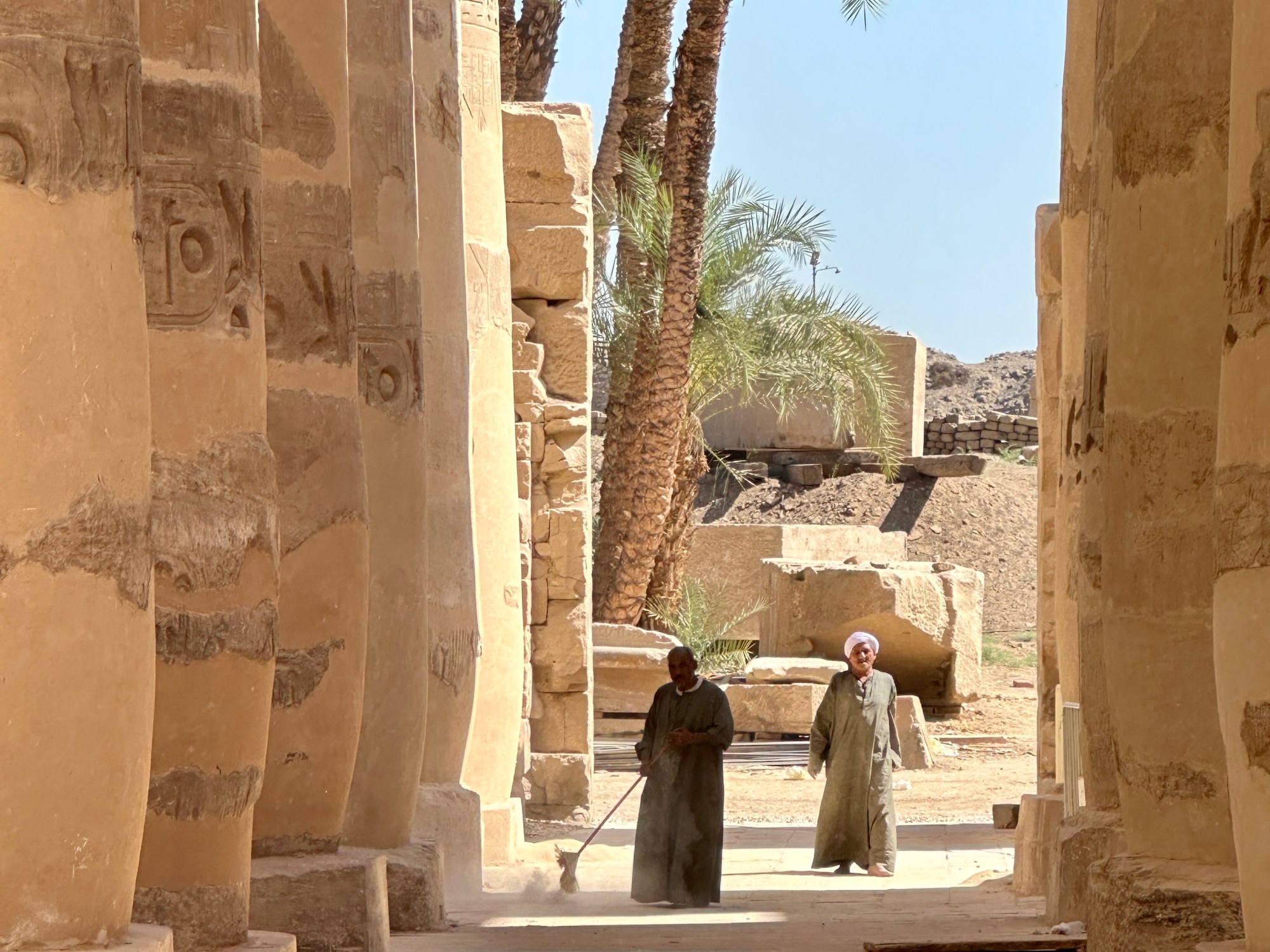
Let’s get back to Luxor… another early start, another piercing blue sky, cloudless. Already the sun burns down on us as soon as we leave the air-conditioned taxi, and it’s only April, I can’t even begin to imagine the temperature in the middle of summer. I am spending a lot of time hardly believing what I’m seeing or what I am experiencing…
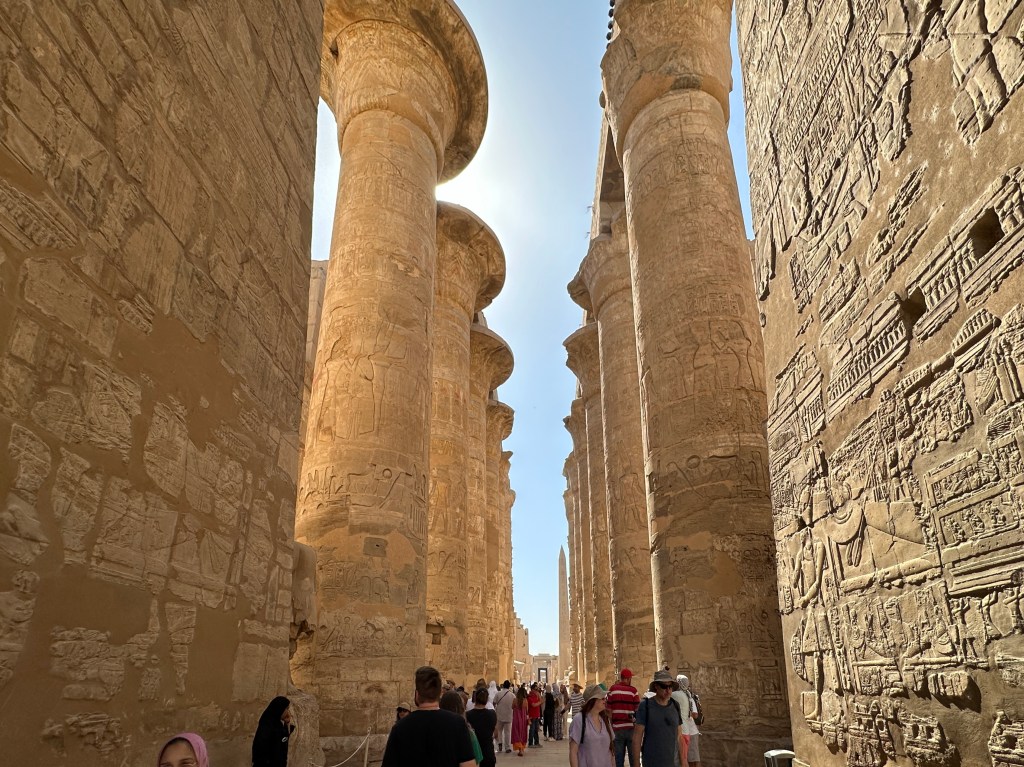
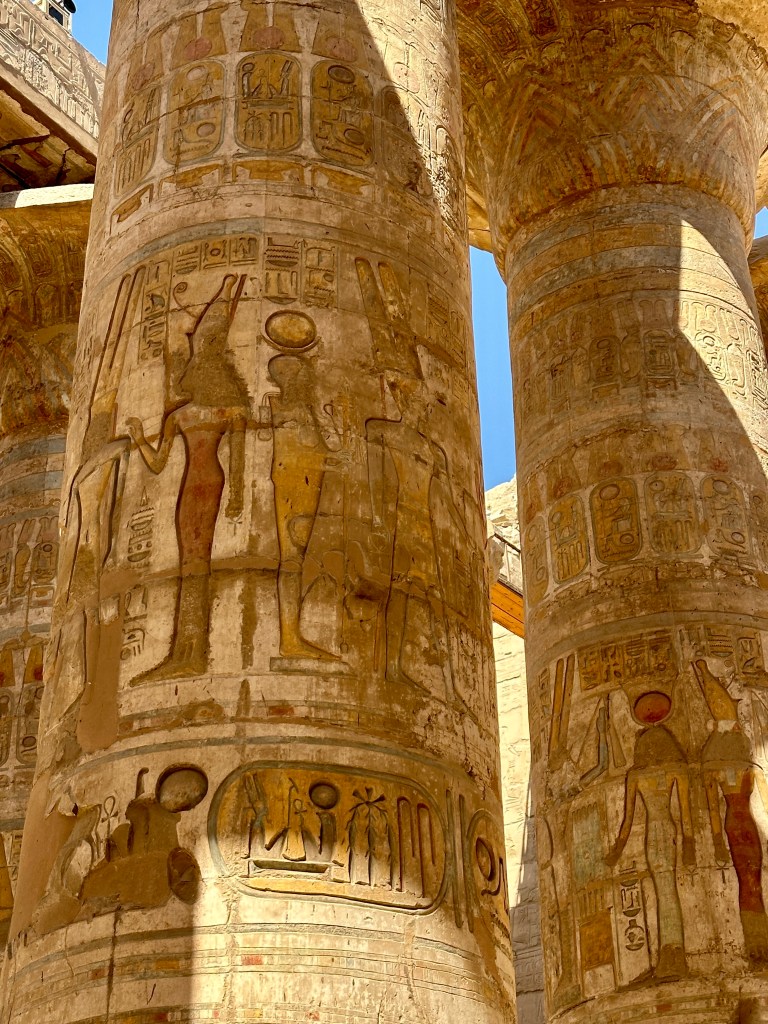
The first stop of the day is the temple of Karnak, which does not need any introduction because it has been in so many movies that it is instantly recognisable. Those huge columns look familiar but haven’t lost any of the magic, they vibrate with history and times gone by. The things they must have witnessed!
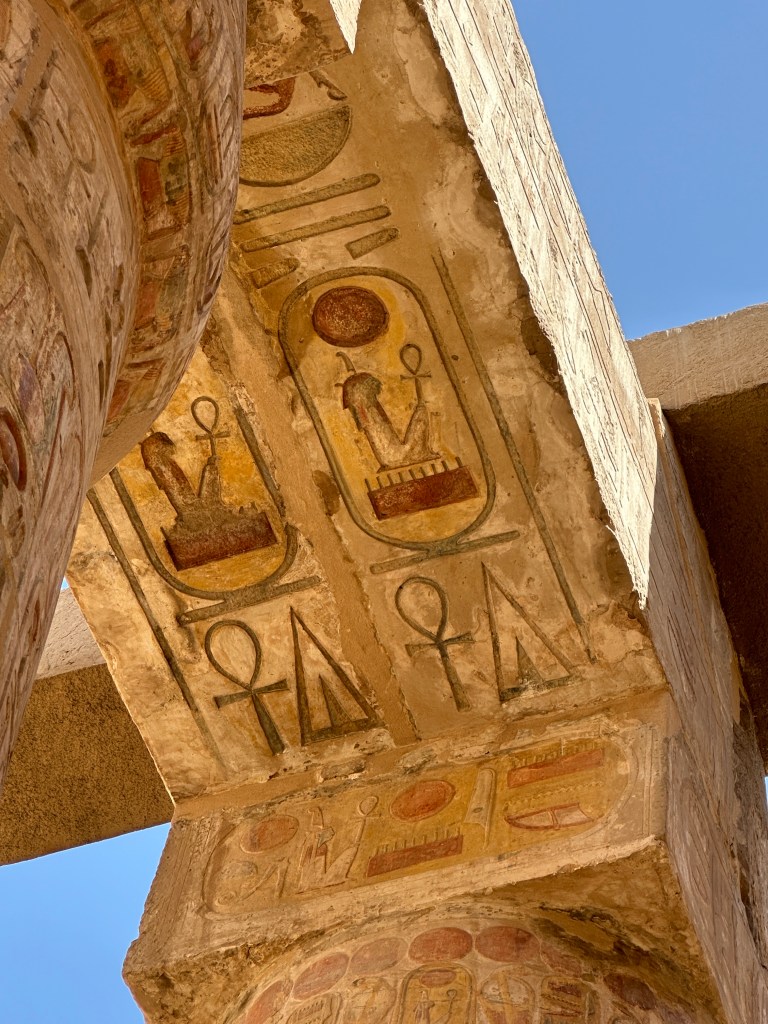
First of all, it is a complex of many temples and other administrative buildings and it is huge. And I mean blow away huge. The actual name ‘Karnak’, means fortified village. The primary structure was built during the reigns of Amenhotep III and Ramses II, circa 1500 to 1200 B.C., but other rulers from Tutankhamun to Alexander the Great added their own touches over the years. The temple was dedicated to Amun in his form as a fertility god and was used during the annual Opet Festival of royal renewal. Today it is still a place of worship—the Abu el-Haggag mosque added in the 11th century is still operational today.
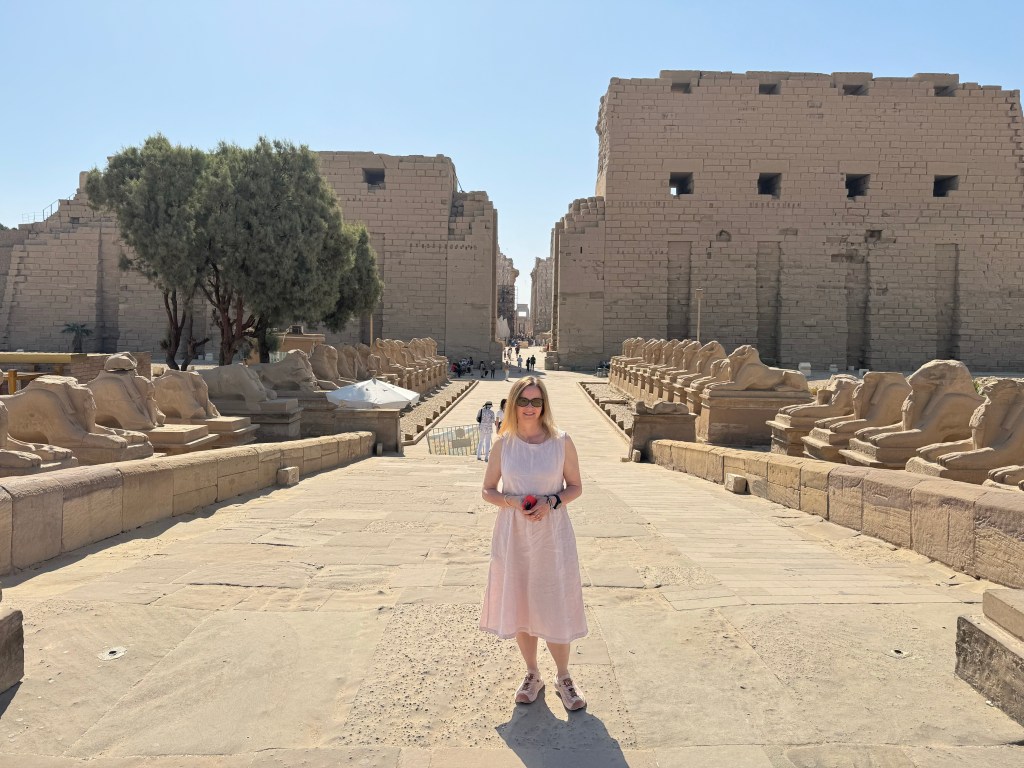
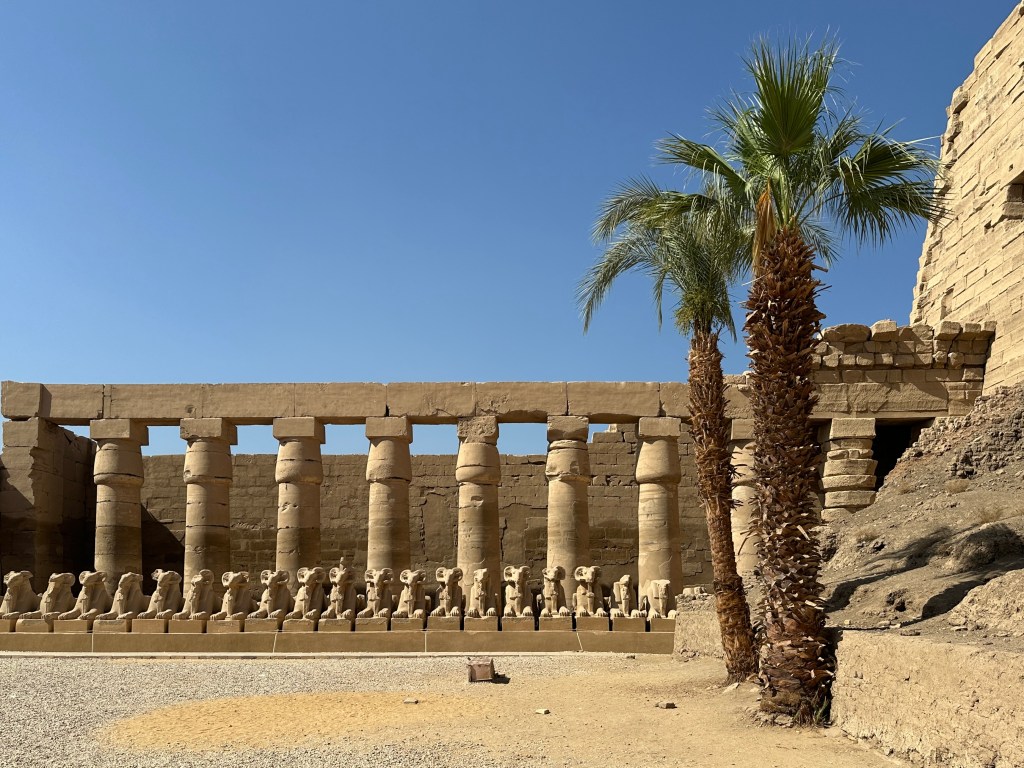

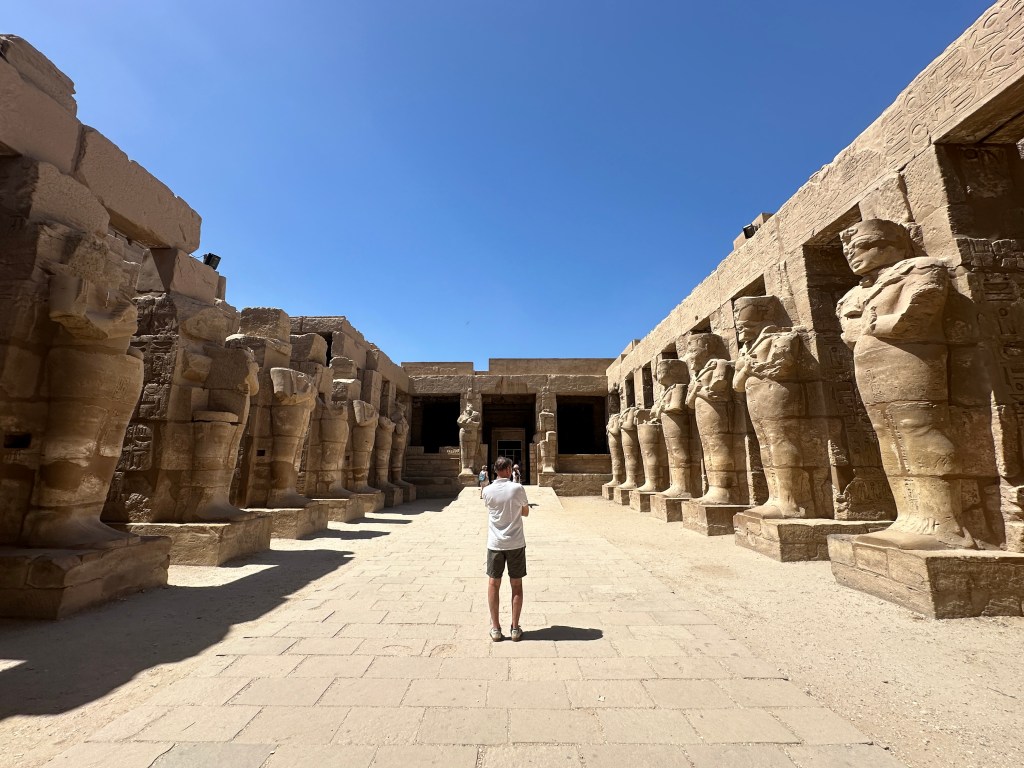
Once you get over its magnificence and its magnitude you get told that this complex was indeed also linked to another legendary site, the Luxor Temple, by a grand 1.9-mile-long (3-kilometer-long) avenue lined with sphinxes. Hard to imagine, but the remnants are there… and are still being excavated, one day perhaps we’ll be able to walk the whole way between them.

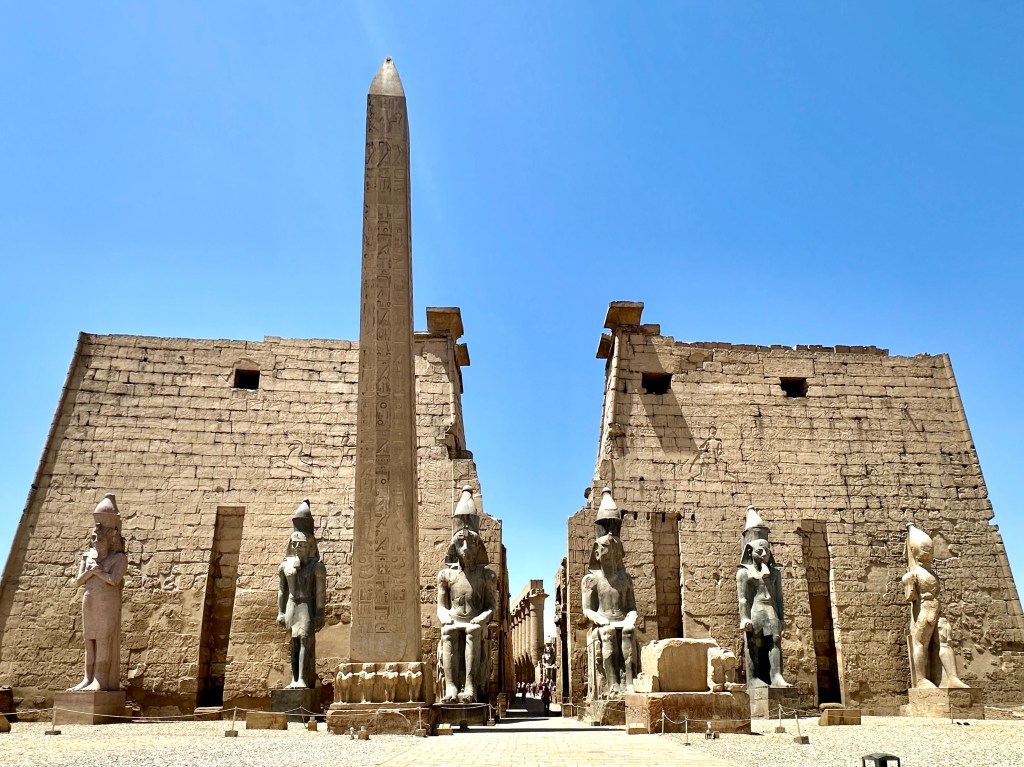
The Luxor temple, unusually wasn’t dedicated to a particular god, but it was thought to be a place for coronations and burial instead. As you can see from the picture of the main facade, one of the obelisk is missing… it happens to be in Place de la Concorde in Paris. The King of Egypt, Muhammad Ali Pasha, gifted it to the King of France, Louis Philippe, in 1829 and it took three years to transport it there.

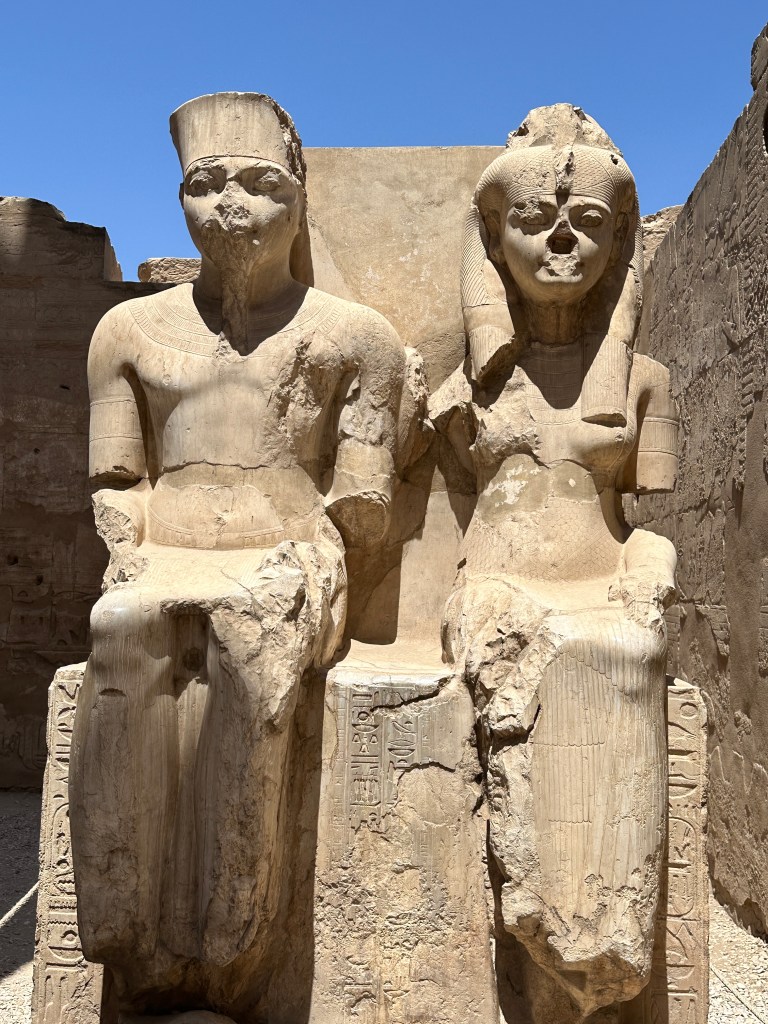

Amongst Luxor Temple’s many layers – at one point it was also a Coptinc Church and a mosque has been built on its ruins – there is an intriguing shrine. For centuries, the Romans used the building for their own cults and rituals, including Alexander the Great. At the rear, you’ll find the Alexander the Great chapel, complete with frescoes of the king dressed as a Pharoah.
Phew. So many facts to remember, I wish I had studied more about all the different dynasties and kingdoms, it is absolutely fascinating, but my brain hurts! Time to read by the swimming pool I think.
 the-wanderings.com